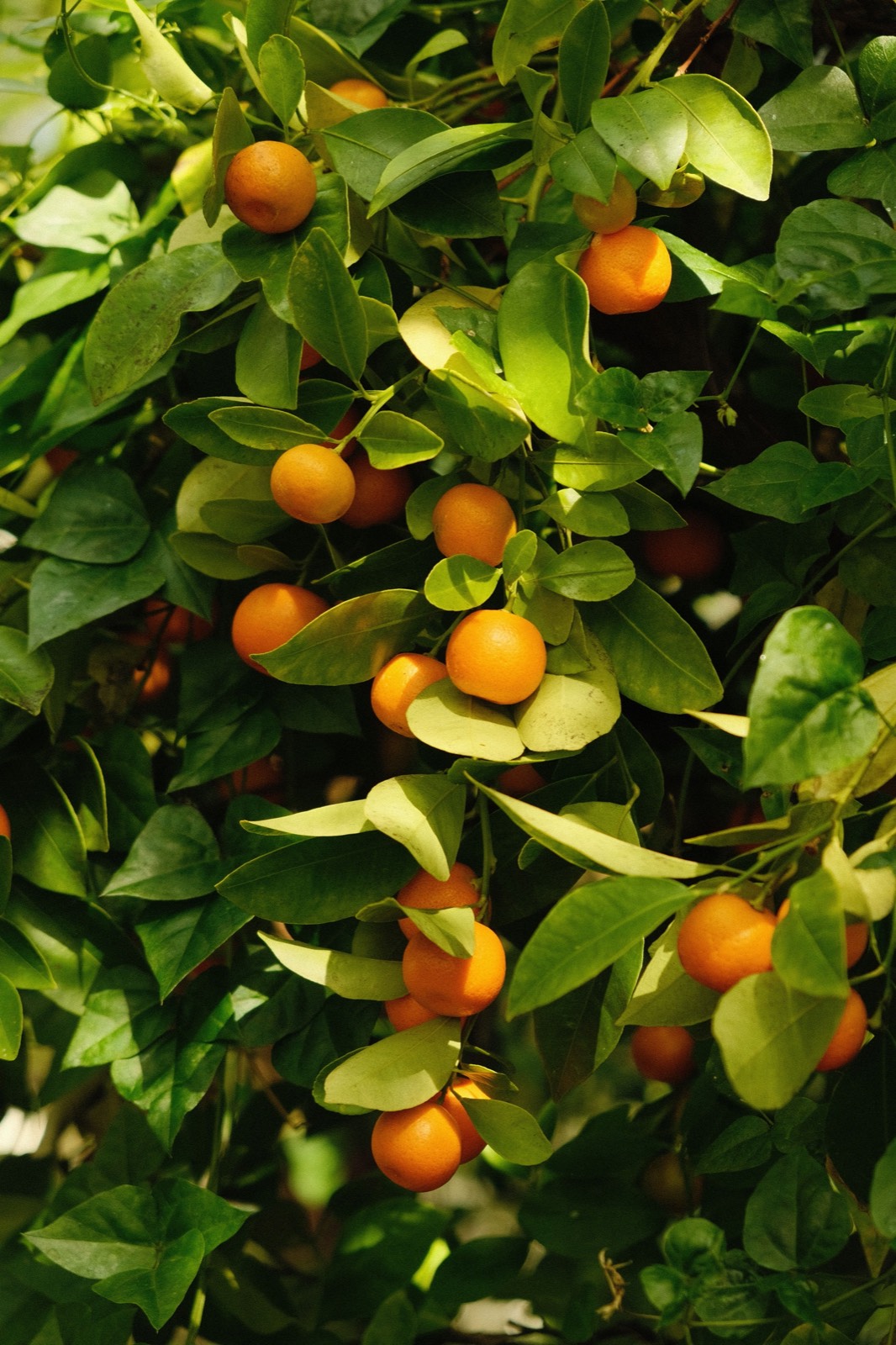
A how-to for the cold-hardiest citrus we can grow — the one mandarin with a real shot at living in the ground here, in a protected spot under frost cloth. Part of the Greenhouse.
Start in a 20–25 gallon pot with a fast-draining citrus mix (potting soil cut with bark fines and perlite). Citrus hate wet feet. For the first few winters, wheel the pot into the 16×40 greenhouse whenever a hard freeze (mid-teens) is forecast. Plant in-ground only after the tree is 2–3 years established, and only on the warm south side of a building or wall.
For an in-ground tree, keep a frame and frost cloth on hand — drape to the soil and add a clamp light or string of old C9 bulbs underneath for a few degrees of insurance. Mound mulch and wrap the trunk graft. Water before a freeze (moist soil holds heat). Move pots in when nights drop below the upper teens; bring them back out once the cold snap breaks so the tree gets light and airflow.
| When | What |
|---|---|
| Late winter (Feb) | Light prune for shape; remove dead/crossing wood. First feeding of citrus fertilizer. |
| Spring | Bloom — intensely fragrant. Feed again. Move any container out of the greenhouse once frosts end. |
| Summer | Heavy water and a third feeding; fruit sizes up. Watch for leaf miner and scale. |
| Fall (Nov–Dec) | Harvest — satsumas color up while still a touch tart; taste-test before picking. |
| Hard freeze warning | Cover or roll in. Frost cloth + heat for in-ground; into the greenhouse for pots. |
The number-one killer here. A sudden mid-teens freeze on an unprotected or young tree means dropped leaves, split bark, and dieback — sometimes death to the graft. Defrost cloth, trunk wrap, and a freeze plan are not optional. After a freeze, don't prune damaged wood until new spring growth shows you what's truly dead.
Watch for scale and sooty mold, plus citrus leaf miner on tender flushes — treat with horticultural oil. Potted trees dry out fast in Texas heat: check daily in summer, but never leave them sitting in water. Yellow leaves usually mean either overwatering or a nitrogen/iron shortfall.
| Item | Note |
|---|---|
| When to pick | Color + taste, not calendar — satsumas can look orange before they're sweet. |
| How they store | Best eaten fresh; the easy-peel rind puffs and softens if left too long on the tree. |
| Yield | A mature tree is generous — plan to share or juice the glut. |