Private core · Home & Infrastructure

Home & Infrastructure

~95% of the budget and all the debt. Produces no food — it's what every other bucket stands on.

A1 What it is

Land, a basic livable house, and the utilities that make the property work. This is the one bucket that carries a mortgage — serviced by your income, not the farm. The farm shrinks even this, by erasing most of your grocery bill and (via an ag/wildlife tax valuation) most of the property tax.

A2 Line-item cost — to get onto the land, livable

Phase 1 · year 0–1
ItemCostNotes
Land — 10 acres$150,000Outer county; biggest lever, every $10k off = $10k of farm
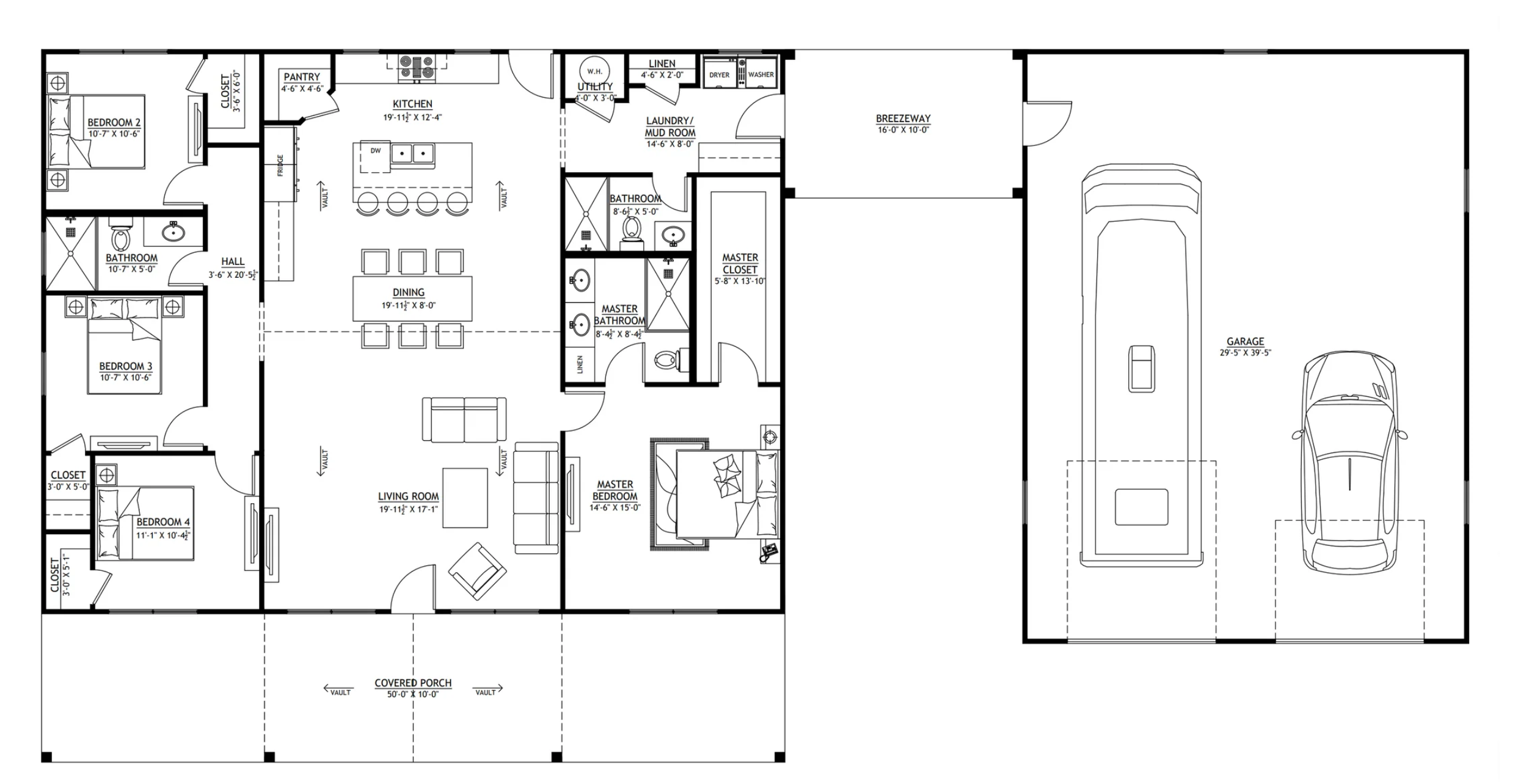
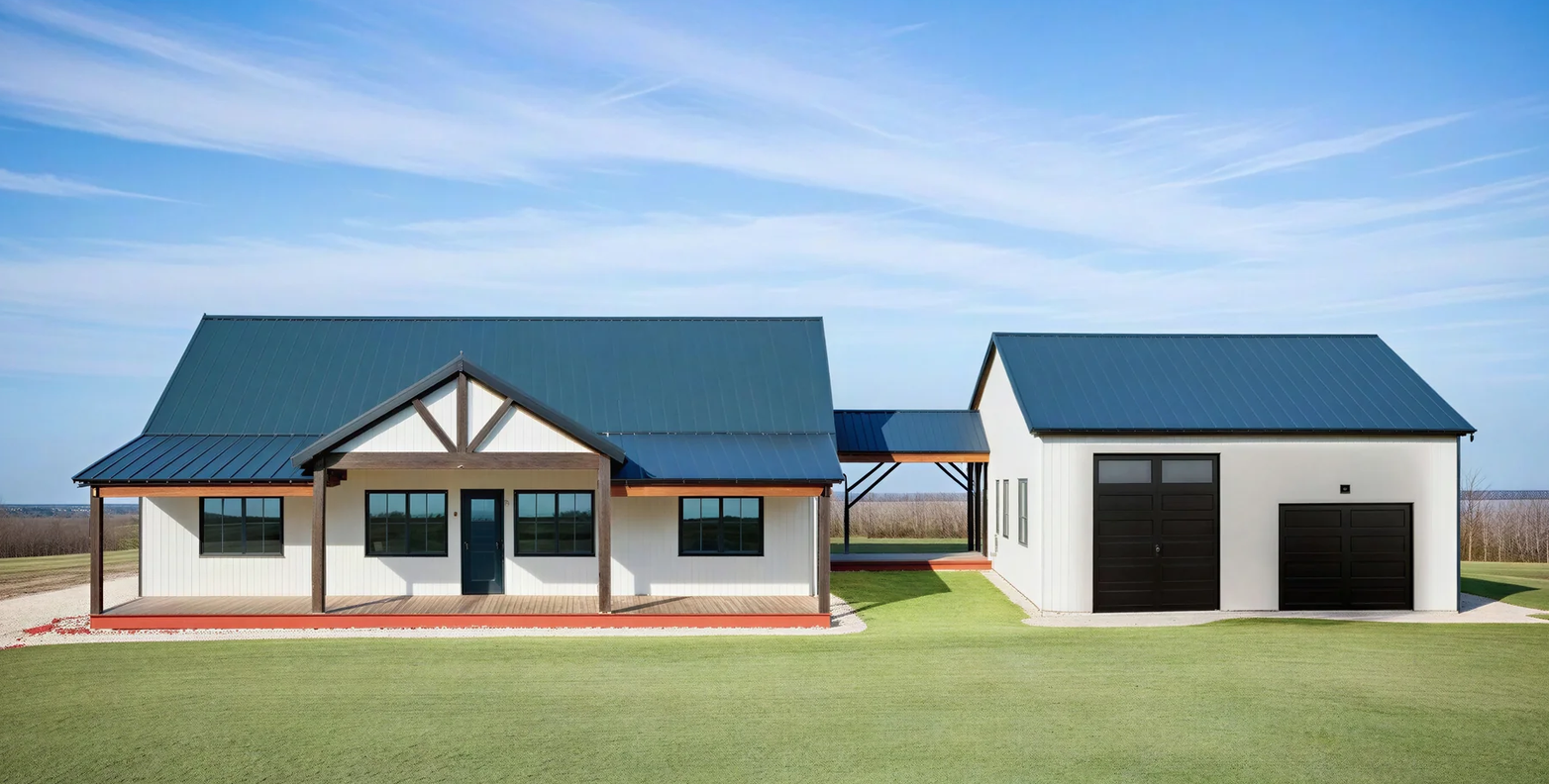
House — 4-bed / 2-bath square, ~2,000 sf$200,000Simple form; owner-build saves more
Well + pump + pressure tank$18,000Trinity aquifer, 200–600 ft
Septic — aerobic system$14,000Required rural
Perimeter fence — cattle (high-tensile/barbed)$10,000~2,640 ft; cheaper than goat woven-wire; DIY saves more
Rainwater tanks + gutters$7,0002 × 5,000 gal
Electric service + trench$7,000You dig the trench
Driveway / culvert / pad prep$6,000Materials — you run the machine
Set-back drive + utility extension to the house$12,000~400–600 ft more gravel + buried water + electric to reach the private north core
Bucket A subtotal~$424,000Trim toward $400k via cheaper land / owner-build. The machine is its own line below.

House build Kit + you as the GC

The $200k house line only holds if you act as your own general contractor — buy a kit/shell, sub out the licensed trades, and do the finish work yourself. The square, metal-roof form was chosen to make exactly this path cheap and fast.

~2,000 sf, North Texas, 2026 — the cost ladder
Path$/sf~2,000 sfWhat it covers
Kit / shell only — metal (barndo)$30–50$60–100kSteel frame + roof/walls erected; no slab, MEP, or interior
Kit only — panelized wood$42–85$83–170kWall/roof panels + plans; you/subs erect & finish
You as GC — kit + subs + sweat$80–120$160–240kSlab, framing, MEP, finish — you manage the trades
Turnkey builder$130–200$260–400kBuilder does everything
Owner-GC saving vs turnkey~$80–120kRoughly 25–40% — the plan banks this

Kit suppliers to quote

Metal / barndominium (matches the standing-seam roof, fast dry-in): Mueller Homestead Series (Texas), Worldwide Steel. Panelized wood (appraises like a normal house): Green-R-Panel, Redstone, Zip Kit Homes. Roundup: PrefabReview — Texas kits.

What the GC role really means

The kit is only ~20–30% of the finished cost — turnkey runs 3–5× the kit price. You still sub slab, frame erection, electrical, plumbing, HVAC, and septic (licensed + inspected), carry a 10–15% contingency, and the time/scheduling falls on you. Financing wants an owner-builder construction loan — Texas Farm Credit / Capital Farm Credit understand barndos + rural land. Metal needs closed-cell spray foam for the Texas heat.

Next step before trusting the $200k: get fixed kit quotes for the exact footprint from Mueller Homestead and one panelized supplier, plus 2–3 sub bids for slab + erection. Expect it to land ~$190–230k as GC. → Follow the full GC build checklist (step-by-step, with a possible-cost column).
Machine The one big tool

Pulled out of the house build on purpose: the tractor isn't part of the home — it's shared equipment that mows, clips, augers, and hauls for every bucket. Bought in Phase 1 so the site work and fencing can happen, but it's its own line, not part of the $424k home.

ItemCostNotes
Tractor + front loader + implements$38,00035–45 hp 4WD; box blade, brush hog, post auger. Used ~$20–25k saves $13–18k (see docs/04-equipment.md)
Equipment subtotal~$38,000Home $424k + machine $38k = the ~$462k platform that carries the debt

A3 Outbuildings, shelter & safety

The pieces a working homestead needs that the bare house + utilities don't cover — dry storage, weather protection, and (this is North Texas) a place to ride out a tornado.

ItemCostNotes
Hay & equipment pole barn — 30×40 open$14,000Keeps winter hay dry + covers the tractor/implements; can precede or replace the Phase-4 shop
Storm shelter / safe room$6,000Tornado alley — precast concrete or an in-garage reinforced room
Attached carport / garage$8,000Covered parking off the house; garage costs more
Root cellar / cold pantry$4,000Stores roots, onions, garlic, squash, canned goods — the non-freezer larder
Garden & orchard wildlife fence$4,000Against feral hogs + deer; trees are caged but the blocks need a perimeter
Fuel storage + backup generator$3,000Diesel/gas for the tractor; outage backup (or lean on later solar + battery)
Entrance gate + cattle guard$2,000At the county road; cattle guard saves opening a gate every trip
Outbuildings & safety subtotal~$41,000Animal shelters/handling are costed on the Animals page

A4 Deferred / optional adds (Phase 4)

ItemCostNotes
Workshop — 20×40 metal / pole barn$30,000–40,000Equipment + storage; build once cash allows
Solar — 8–12 kW (roof or ground-mount)$20,000–35,000Conduit roughed in at build; add array later
Optional later~$50,000–75,000Not in the ~$540k core

A5 Ongoing cost & role

Ongoing

Mortgage (the only real debt), property tax — slashed by an ag / wildlife valuation on the land, homeowner's insurance, and tractor fuel + maintenance. Utilities trend low with the well, rain tanks, and (later) solar.

Role in the system

The platform. The roof feeds rainwater to the garden and habitat; the well + buried main feed every hydrant; the tractor mows and clips for the animals and hauls for all. Spend capital here once so the other buckets can run on almost no cash.