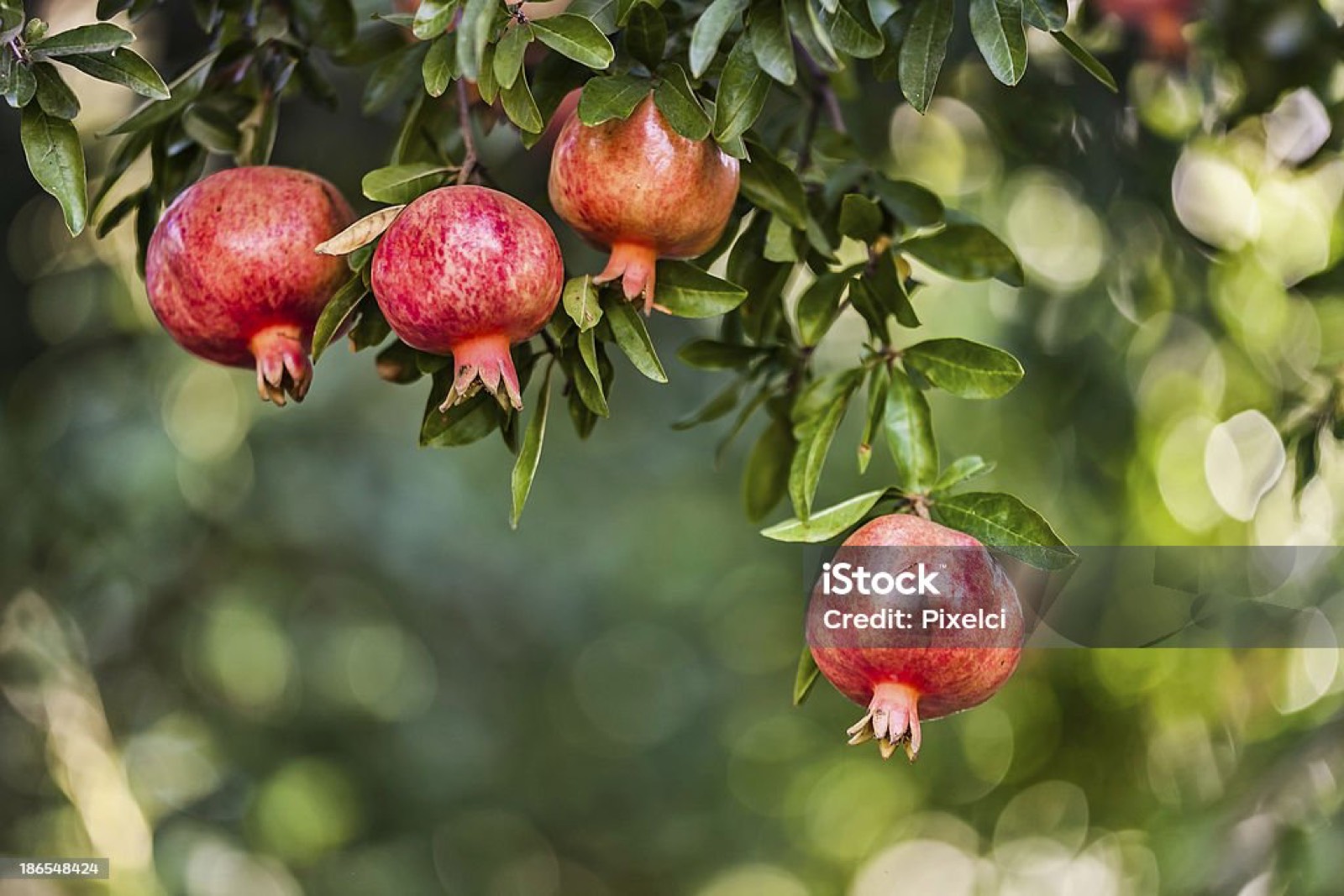
A how-to for the drought-tough showpiece — pomegranates love our heat and alkaline soil, ask for almost no water once rooted, and pay off in jewel-red fruit. Part of the Orchard.
Plant in spring after frost danger eases. Space shrubs 12–15 ft apart — they grow as large multi-trunk bushes (you can also train to a single trunk). Full, baking sun is exactly what they want for the sweetest fruit. No trellis required; just an open, airy form.
This is one fruit where North-TX alkaline clay is an asset — it tolerates high pH and even some salinity better than almost anything in the orchard. Good drainage is the only must; plant a touch high. Once roots are down, it shrugs off drought; the top may freeze in a hard winter but it resprouts from the base.
| When | What |
|---|---|
| Feb–Mar | Prune & plant. Set new shrubs; on established plants thin suckers and shape lightly while dormant. |
| Apr–Jun | Showy orange-red bloom (self-fruitful, but bees boost set). Keep water steady through bloom and fruit-set to prevent drop. |
| Sep–Nov | Harvest. Fruit colors up and ripens in fall; pick before hard frost. A long warm fall = sweeter arils. |
| Winter | Drops leaves, goes dormant; mulch the base in case of a hard Zone-8 freeze. |
Fruit splitting is the classic problem — caused by uneven water (drought then a big rain near ripening). Keep moisture steady late in the season. Leaf-footed bugs can damage fruit; fungal fruit rot shows in wet falls. Pests are light overall.
Our occasional hard freezes can top-kill young plants — hence the cold-hardy Salavatski and base mulch. A cool, short fall can leave fruit less sweet, so site them in the hottest, sunniest spot on the place.
| Step | How |
|---|---|
| Knowing when | Deep color, fruit feels heavy, and the skin turns slightly flat-sided. Tap test: ripe fruit sounds metallic. |
| Picking | Cut (don't pull) with snips so you don't tear the branch. Harvest before a hard frost; they don't ripen further off the bush. |
| After harvest | Little needed — thin suckers, keep the center open, and ease back on water once dormant. |