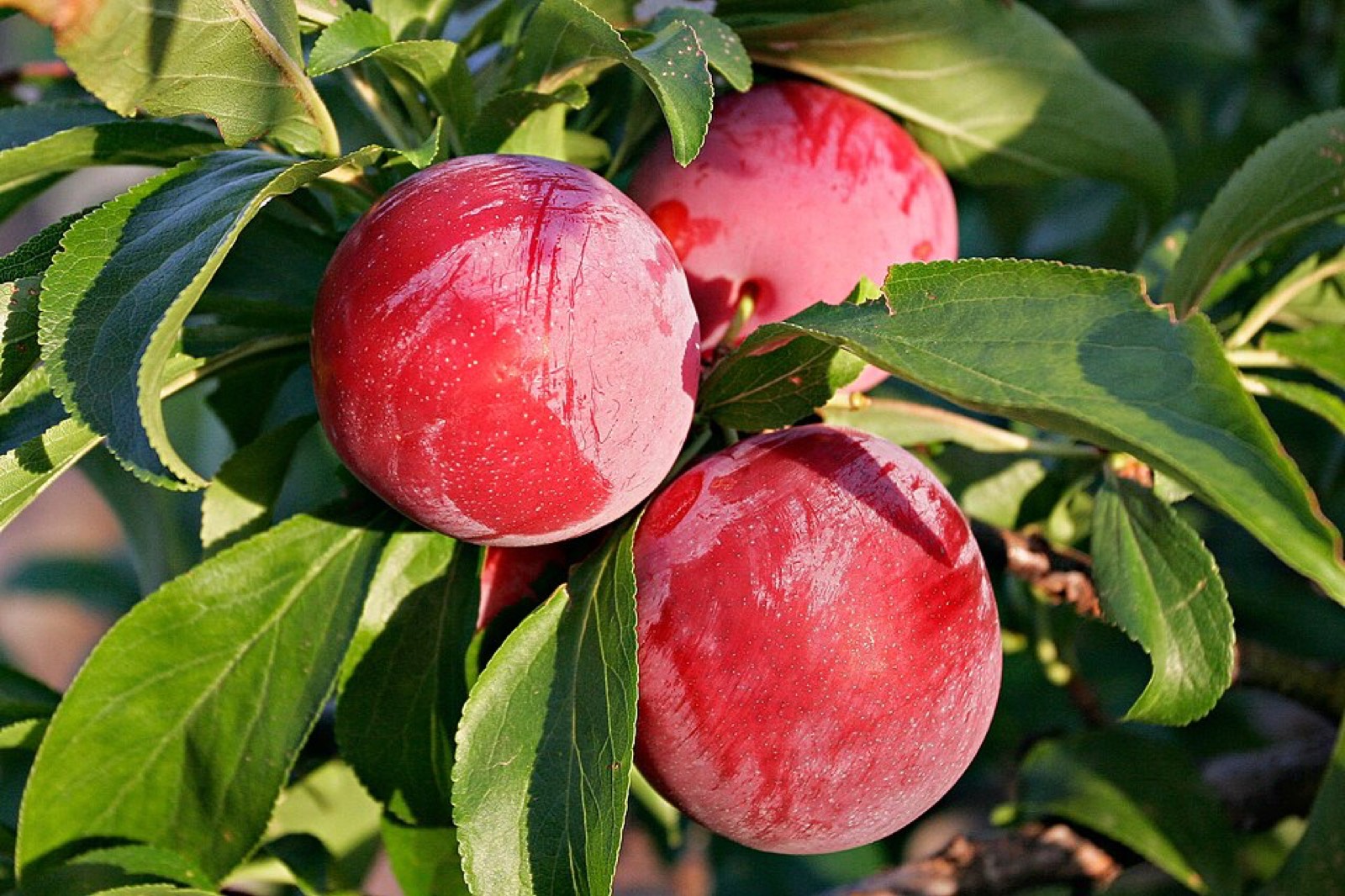
A how-to for fast, heavy-bearing plums — low-chill Japanese types that cross-pollinate and fruit young in North Texas. Part of the Orchard.
Set bare-root in Jan–Feb while dormant. Space 15 ft apart in full sun. Keep the graft union above the soil line, water in deep, and mulch the ring. Plums are vigorous and fast — expect strong growth and early fruit.
Plant the low-chill trio together so bloom overlaps: Methley (self-fruitful, the key pollen source), Bruce (heavy, great for cooking/jam), and Santa Rosa (classic flavor). Mixing all three guarantees good fruit set across the block — never plant a single non-Methley variety alone.
| When | What |
|---|---|
| Dormant (Jan–Feb) | Prune to an open-center vase; thin out the dense, twiggy interior growth plums love to make. |
| Spring bloom (Feb–Mar) | Early white bloom; Methley/Bruce/Santa Rosa overlap and cross-pollinate. Watch for late frost. |
| Late spring | Thin heavy clusters to ~4–6 in apart — sizes the fruit and prevents limb-snapping over-set. |
| Summer | Deep water in heat; scout for plum curculio and watch fruit for brown rot. |
| Early–mid summer | Harvest — Methley ripens early, Bruce and Santa Rosa follow; plums color before they're fully sweet, so taste-test. |
Plum curculio scars and drops young fruit (look for crescent egg-laying cuts); brown rot rots ripening fruit in humidity. Plums can also catch fire blight and bacterial stem canker — prune out any blackened shoots and sterilize tools between cuts. Sanitation (clearing dropped, mummified fruit) does a lot.
These bloom early, so a late frost can cut the crop — keep trees off frost-pocket low ground. In good years they over-set wildly, so thinning isn't optional if you want decent-sized fruit and unbroken limbs.
| Item | Figure |
|---|---|
| First real crop | year 3–5 |
| Mature yield per tree | ~1–3 bu |
| Trees in the block | 10 @ 15 ft |
| Best use | fresh, jam, dried |