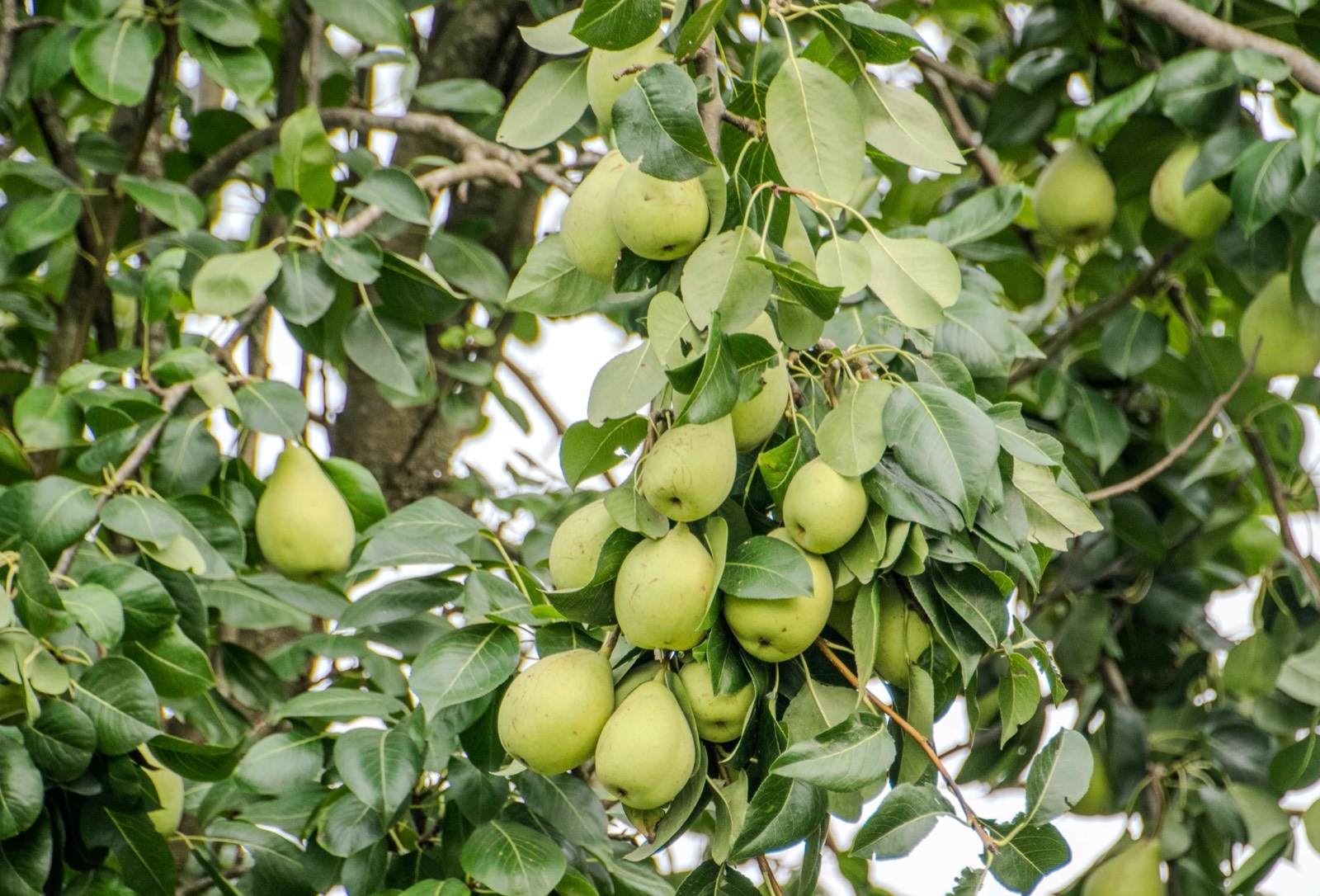
A how-to for the toughest fruit in the block — fire-blight-resistant, low-chill pears that shrug off North Texas heat and clay. Part of the Orchard.
Plant bare-root in Jan–Feb while dormant. Pears grow big, so give them 18 ft of room in full sun. Keep the graft union above the soil line, water in deep, and mulch the ring. They're slow to start but extremely long-lived once established.
All in on the blight-tough pair: Kieffer (vigorous, hard, great canned/baked) and Orient (rounder, juicier, also blight-resistant). Their bloom overlaps for good cross-pollination — a five-and-five split works well.
| When | What |
|---|---|
| Dormant (Jan–Feb) | Prune lightly to a central leader — go easy; hard pruning pushes soft growth that invites fire blight. |
| Spring bloom (Mar) | White bloom; Kieffer & Orient overlap and cross-pollinate. Bloom is the main blight-infection window. |
| Late spring | Thin heavy clusters to spread the load and size up the fruit. |
| Summer | Deep water in heat; scout weekly for blackened "shepherd's crook" shoots and cut them out. |
| Late summer–fall | Harvest hard and ripen off the tree (pears go mealy if left to soften on the branch). |
Fire blight is the pear-killer in Texas: shoot tips blacken and curl into a "shepherd's crook," and it can race down a limb. Our resistant cultivars rarely lose a whole tree, but still prune out strikes 8–12 in below the damage, sterilizing shears between cuts, and avoid lush growth from over-fertilizing or hard pruning.
Codling moth and pear psylla turn up but rarely ruin the crop. A late frost on open bloom can cut yield, so keep trees off frost-pocket low ground. Otherwise these are the lowest-maintenance trees in the orchard.
| Item | Figure |
|---|---|
| First real crop | year 4–6 |
| Mature yield per tree | ~3–5+ bu |
| Trees in the block | 10 @ 18 ft |
| Best use | canning, baking, fresh |