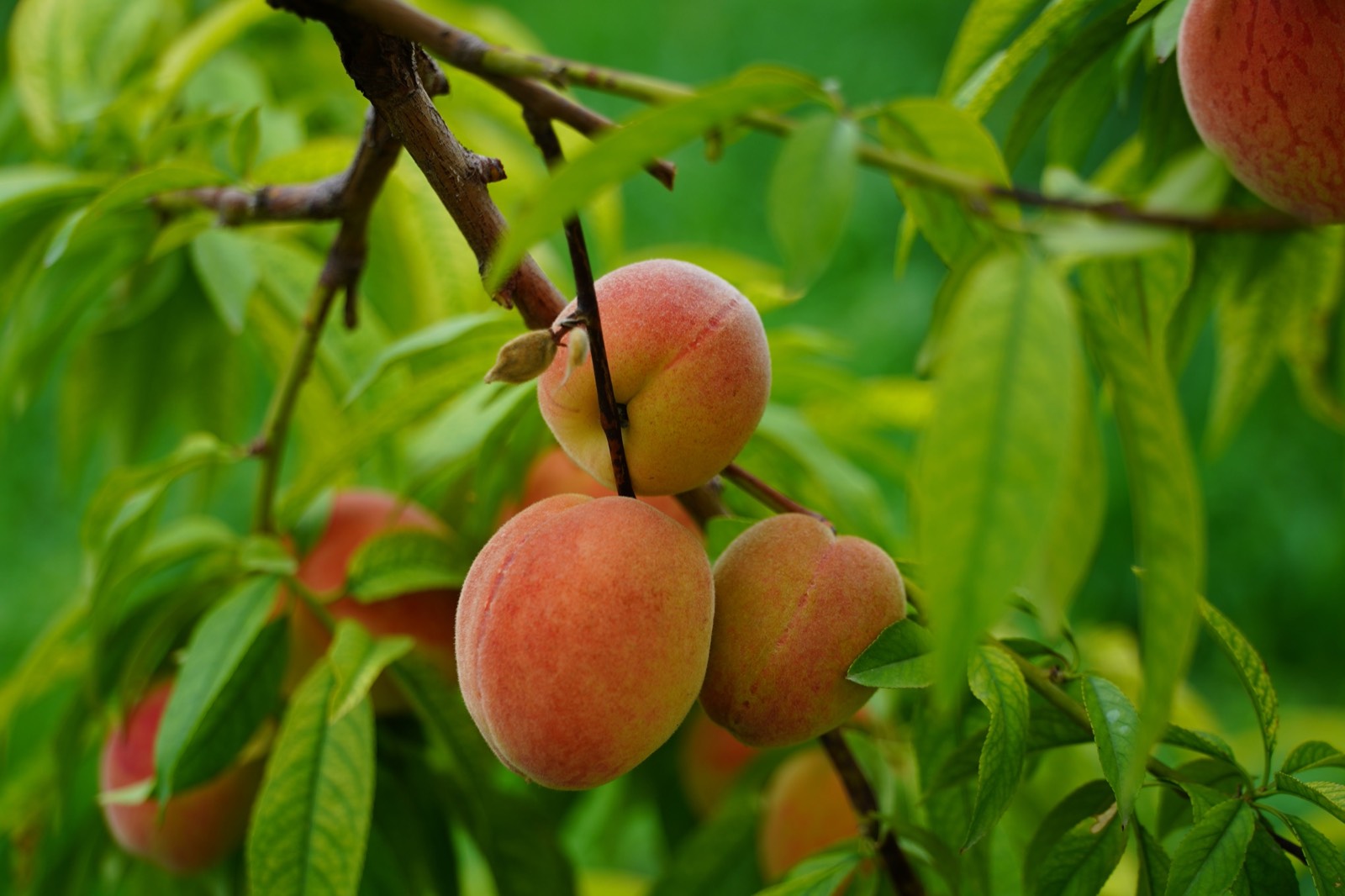
A how-to for the crown jewel of a Texas orchard — low-chill peaches that ripen sweet in Zone 8 heat, if you nail the variety and the thinning. Part of the Orchard.
Plant bare-root in Jan–Feb while dormant. Space 18 ft apart in your best-drained, full-sun spot. Keep the graft union above grade. Peaches are the shortest-lived tree here (~12–15 yr), so plan to replace a few over time — fast to bear, fast to age.
Spread the harvest across the three low-chill picks: Ranger and La Feliciana (proven Texas freestones) plus Redskin (a classic late freestone). Staggering ripening means weeks of peaches instead of one overwhelming week.
| When | What |
|---|---|
| Dormant (Jan–Feb) | Prune hard to an open-center "vase" — peaches fruit on last year's wood, so heavy annual pruning is essential for size and light. |
| Spring bloom (late Feb–Mar) | Pink bloom — early, so late frost is a constant threat. Self-fertile, no partner needed. |
| Late spring | Thin aggressively to one fruit every 6–8 in — the single most important chore. Unthinned trees give marbles and break limbs. |
| Summer | Deep, steady water (uneven water cracks fruit); spray/scout for borers and brown rot. |
| Early–mid summer | Harvest as each variety ripens — Ranger early, then La Feliciana, then Redskin. |
Peach tree borer is the big killer — watch for gummy sawdust at the soil line and treat the trunk base. Brown rot turns ripening fruit to fuzzy mush in our humidity; plum curculio and stink bugs scar fruit. Peaches need the most spray attention of any tree in the orchard.
Late frost is the perennial gamble — peaches bloom early, and a March cold snap can erase the entire crop. Site them on higher ground above frost pockets, and in a bad year accept a skip. This risk is exactly why low-chill (not ultra-low-chill) is the right call here.
| Item | Figure |
|---|---|
| First real crop | year 2–4 |
| Mature yield per tree | ~2–4 bu |
| Trees in the block | 13 @ 18 ft |
| Productive life | ~12–15 yr |