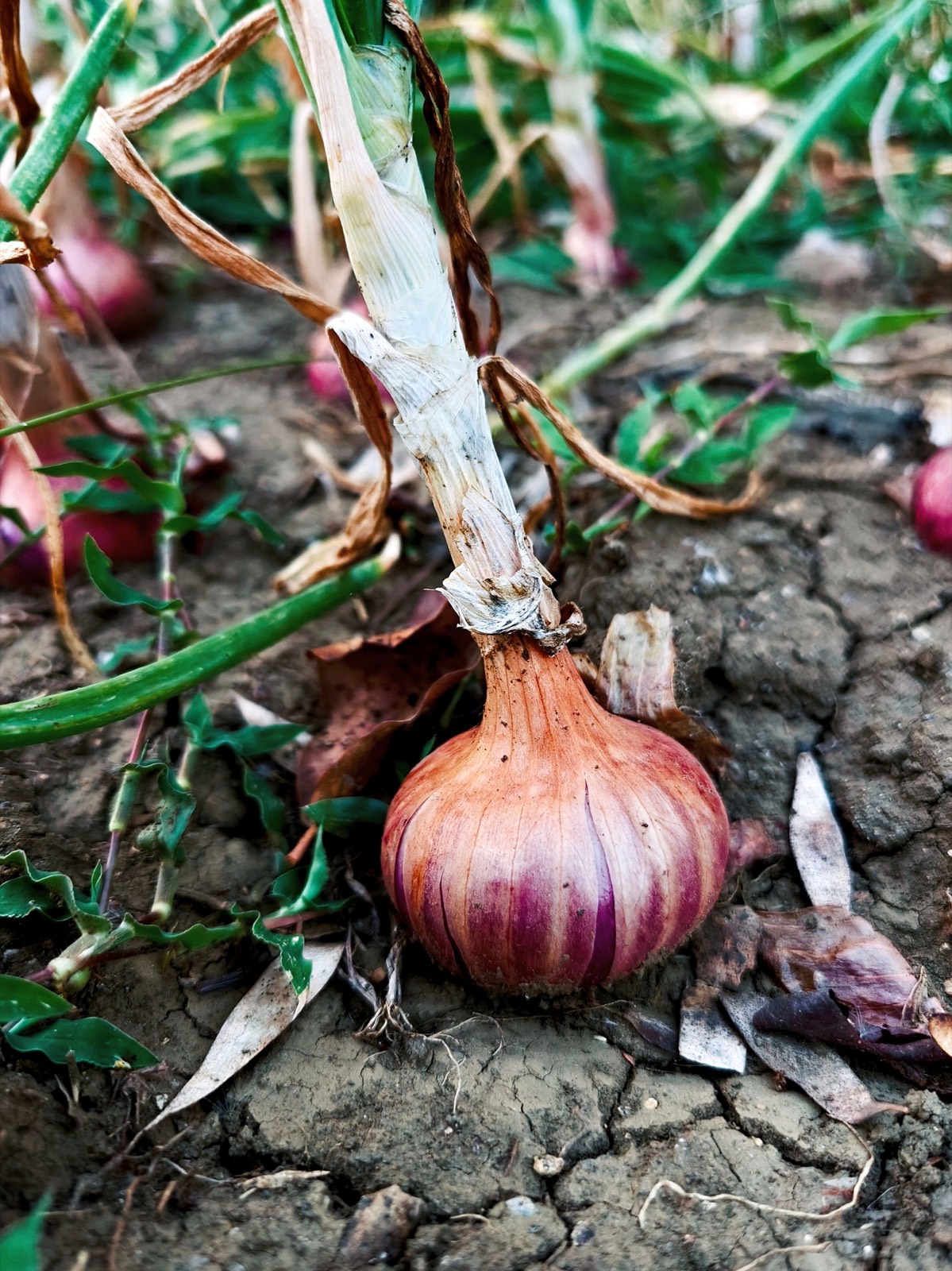
A how-to for the one crop where the variety type makes or breaks you — short-day onions planted deep in winter for big summer bulbs. Part of the Garden & Greenhouse.
This is the make-or-break detail: at our southern latitude you must plant SHORT-DAY varieties — Texas 1015Y, Texas Supersweet, Yellow/White Granex. They bulb when days reach ~10–12 hours, which happens here in spring. Long-day or intermediate onions (sold in northern stores) will never bulb this far south — they just grow tops. Day-length is critical.
Plant as transplants (bundles of pencil-thick starts) in Jan–Feb — not in the spring with the warm crops. Set them shallow, ~1" deep and 4" apart in rows ~1' apart; closer spacing gives smaller bulbs (good for green onions). They grow leaves all winter — every leaf becomes a bulb ring — then size up fast in spring.
| Month | What |
|---|---|
| Nov–Dec | Order short-day transplant bundles (1015Y, Texas Supersweet). |
| Jan–Feb | Transplant starts; they're cold-hardy. |
| Feb–Apr | Grow tops through late winter; feed nitrogen for big tops = big bulbs. |
| Apr–May | Bulbing begins as days lengthen; ease off water and nitrogen. |
| Late May–Jun | Harvest when tops flop and brown. |
| Jun | Cure in shade, then store. |
Thrips are the main pest — silvery streaks on leaves; keep plants unstressed. Onion maggots and fungal downy mildew / neck rot show up in wet ground — rotate beds and don't crowd. Bolting (flower stalks) is triggered by cold stress on oversized transplants — use pencil-thick, not jumbo, starts.
The whole point of winter planting is to finish before the heat. Bulbs size in mild spring and are harvested in early summer, so they dodge the worst of it. Onions left in the ground into the hot, wet part of summer rot fast — harvest on time.
| Stage | Do this |
|---|---|
| Timing | Pull when ~half the tops have flopped over and necks soften. |
| Curing | Garlic-style cure: dry in a shady, airy spot 2–3 weeks until necks are papery. |
| Storage | Trim tops and roots; store the firmest bulbs cool and dry. Sweet types keep weeks, not months — use first. |