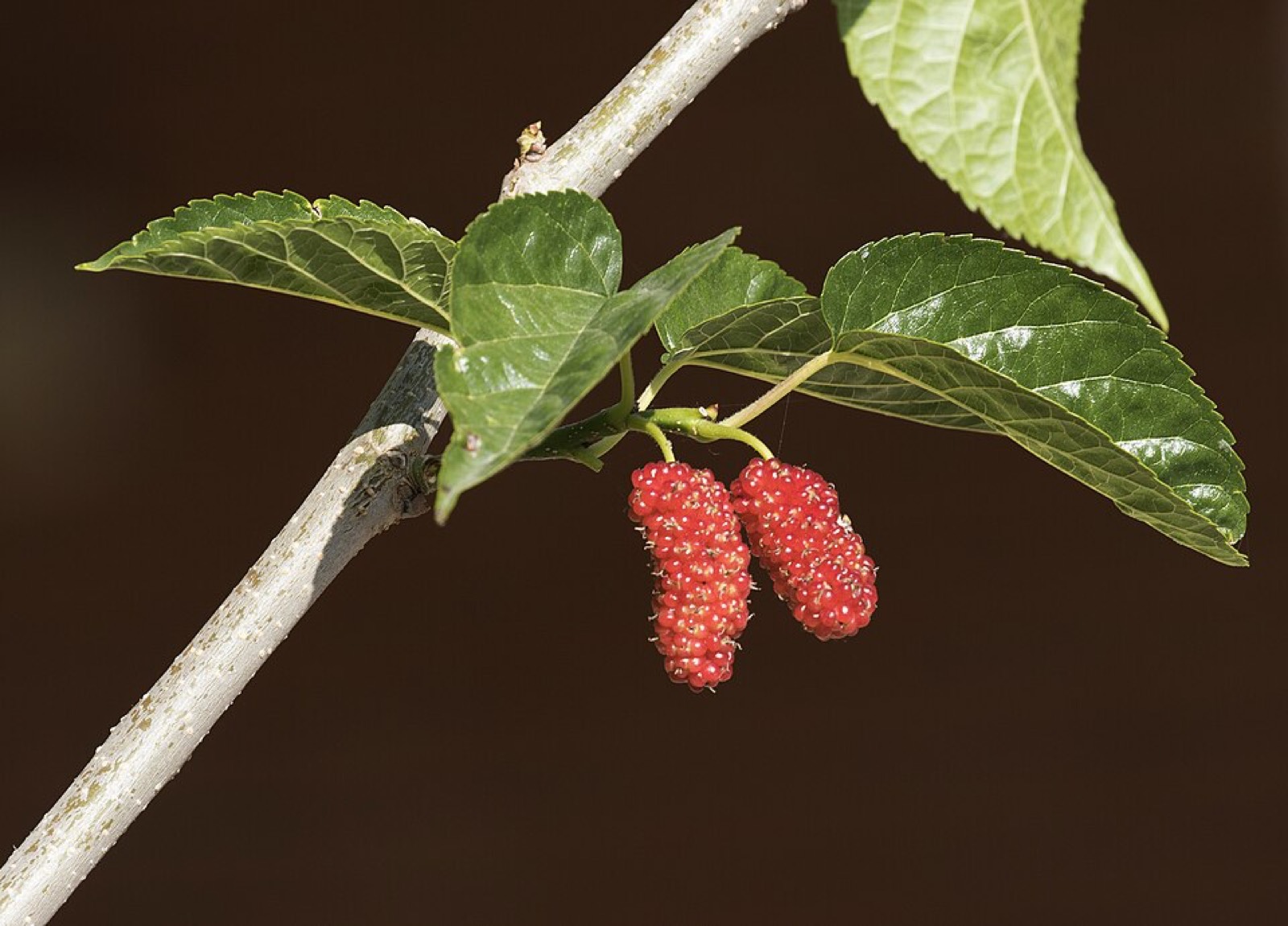
A how-to for the fast, tough shade tree of the silvopasture — quick canopy plus weeks of dropped fruit the poultry and cattle forage off the ground. Part of the Orchard.
Mulberry roots so easily that bare-root whips or cuttings are cheap and plentiful; named types (Illinois Everbearing, Pakistan) fruit longer if you want a known variety. Plant in winter dormancy and space 40 ft apart in the wide paddock rows. Skip the weeping/ornamental forms — you want the big, vigorous fruiting trees.
Cattle love to rub and browse, so each tree still gets a solid cage until the trunk is thick and the canopy is above browse height. Otherwise mulberry is unfussy: it tolerates clay and tough spots far better than the nut trees, though it fruits best in well-drained ground with full sun. Almost no coddling required.
| When | What |
|---|---|
| Winter (dormant) | Plant whips/cuttings; prune to keep fruit within reach and limit height; check cages. |
| Spring | Leafs out fast and early; quick flush of new growth. Little input needed. |
| Early–mid summer | Fruit drop — weeks of berries rain down; poultry and cattle forage the windfall. |
| Late summer | Fruiting tapers; the canopy is doing its main job — shade over the grass and stock. |
| Fall | Leaves drop (good browse/litter); a quiet, hands-off season. |
Mulberry has almost no serious pests or disease here — that's the appeal. The real "problem" is the fruit itself: it stains everything (purple bird droppings, slick paths), so site trees away from parking, walkways, and water tanks. It can also seed itself around freely.
The only daily risk is the herd rubbing a young trunk before it hardens off — keep the cage tight. The trees are so vigorous they can get tall and rangy; an occasional hard prune keeps fruit low and the form manageable. Unripe fruit and raw shoots can mildly upset stock, but windfall ripe fruit is excellent forage.
| Item | Note |
|---|---|
| First fruit | 2–4 yr |
| Harvest window | several weeks, early–mid summer |
| Picking method | shake onto a tarp |
| Whips / cuttings (each) | $15–40 |
| You need: cages through the calf stage | see Orchard |