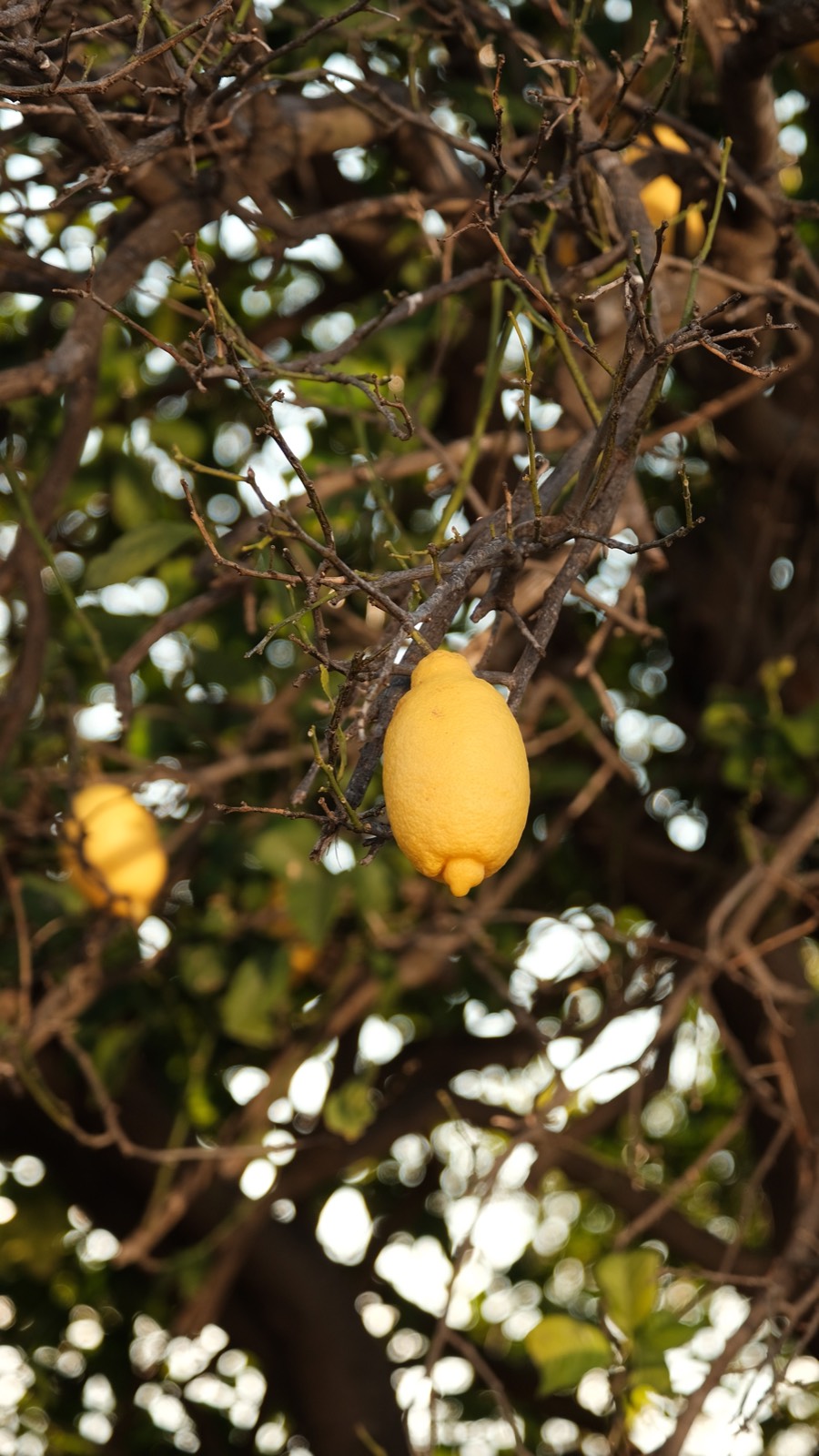
A how-to for the easiest lemon to grow in North Texas — a near-everbearing container tree that lives outside most of the year and ducks into shelter for the cold. Part of the Orchard.
Use a 20–25 gallon pot on a wheeled dolly so one person can move it. Fill with a fast-draining citrus mix — potting soil loosened with bark and perlite; Meyers sulk in soggy soil. Set it in full sun on the warm south side through the growing season. Feed with citrus fertilizer spring, summer, and early fall.
When frost threatens (below ~28°F), roll it into the greenhouse or against a south wall under frost cloth. For a light, brief frost the cloth alone may do; for a hard mid-teens freeze it must be under cover. Bring it back outside on mild days for light and airflow, and move it out for good once spring frosts have passed. Don't shock it — ease it between sun and shelter.
| When | What |
|---|---|
| Late winter | Repot or top-dress if rootbound; first feeding. Keep sheltered until frosts end. |
| Spring | Move outside; flushes of fragrant bloom (and often fruit at the same time). Feed. |
| Summer | Heavy, frequent watering and a second feeding; fruit sets and sizes. |
| Fall–winter | Main harvest as fruit turns deep yellow-orange. Feed once more in early fall. |
| Hard freeze warning | Roll into the greenhouse or cover under frost cloth. |
Below freezing, leaves and fruit are at risk; a hard freeze on an unprotected tree can kill it. The whole strategy is to never let it take a hard freeze — keep the freeze drill ready and don't gamble on a forecast. After any cold stress, wait for spring growth before pruning out what looks dead.
Indoors and out, watch for scale, mealybugs, and spider mites — knock them back with horticultural oil, especially before bringing the tree under cover. Potted Meyers drink fast in summer heat; check daily, but never leave the pot standing in a saucer of water. Leaf drop after a move is normal stress, not death.
| Item | Note |
|---|---|
| When to pick | Fully colored, slightly soft, and fragrant — Meyers don't sweeten further off the tree. |
| How to use | Sweeter and less acidic than a grocery lemon — great for curd, dressings, and drinks. |
| Yield | A happy potted tree fruits in flushes much of the year; expect a steady trickle, not one big crop. |