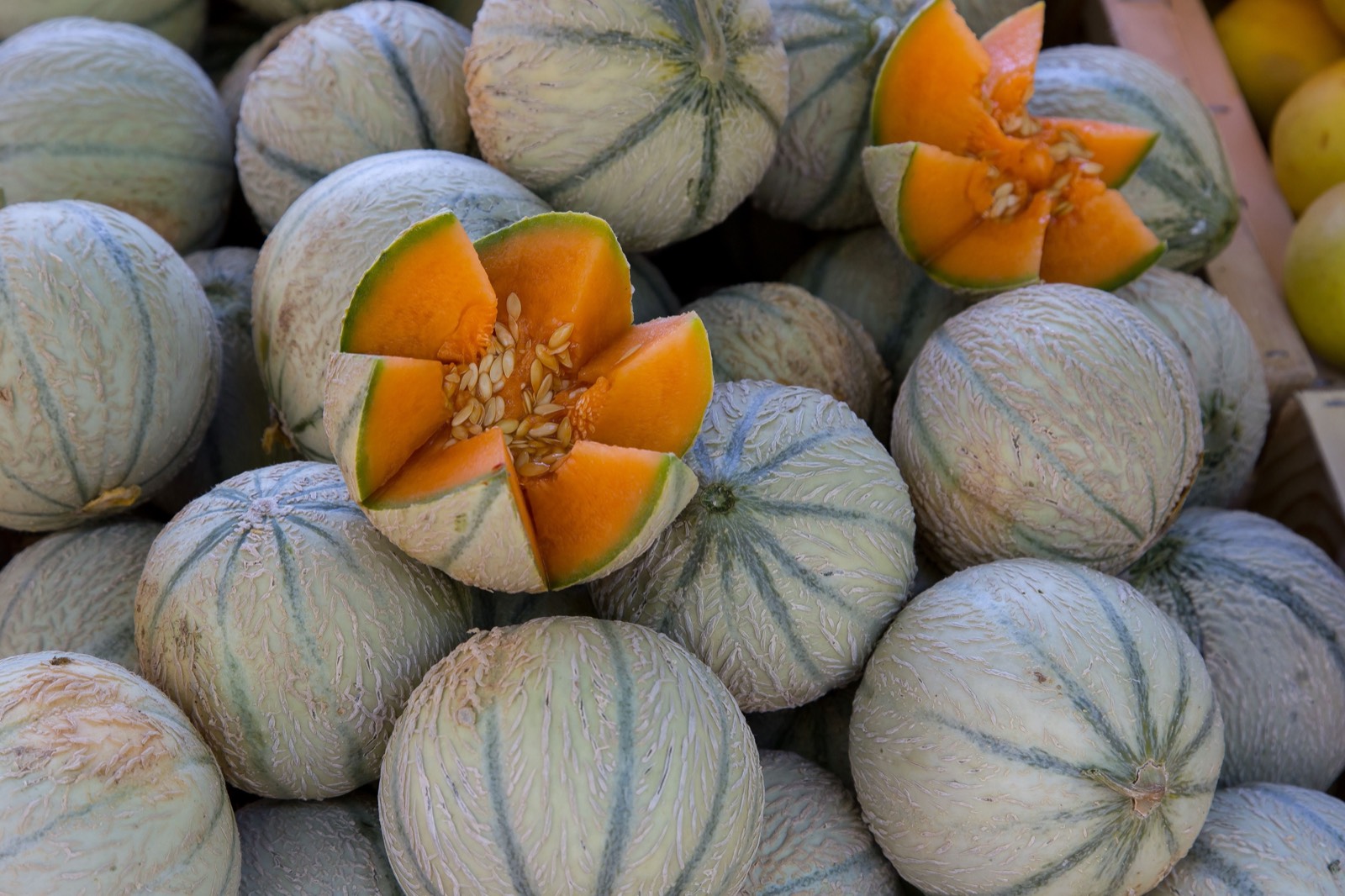
A how-to for cantaloupe and watermelon — heat-loving sprawlers that turn a hot North Texas summer into the sweetest reward in the garden. Part of the Garden & Greenhouse.
Melons are Zone 8's home turf — they love our long, hot summers. Plant on raised hills or mounds for the drainage they demand; soggy roots rot fast. Full sun, all day. Sow 3–4 seeds per hill, hills 4–6 ft apart, then thin to the two strongest. Give vines room to sprawl or train them down rows.
Melons hate root disturbance, so direct-seed right where they'll grow rather than starting flats. If you must get a jump, start in peat/coir pots and set out before they're rootbound. Steady water while vines run and fruit sizes; then ease off water as fruit ripens to concentrate the sugar.
| Month | What happens |
|---|---|
| Mid-April – May | Direct-seed into warm soil on hills; thin to two plants per hill. |
| May – June | Vines run; bees pollinate the blooms; first small fruit sets. |
| June – July | Fruit sizes up fast in the heat; keep water steady until ripening. |
| July – August | Harvest at peak ripeness — the reward of the summer garden. |
| Late summer | A second mid-May sowing can extend picking into September. |
Squash bugs & cucumber beetles hit the vine family hard — scout early and squash egg clusters. Powdery mildew shows up in humid spells; space for airflow and water at the roots, not the leaves. Vine borers can wilt a whole runner overnight.
A heavy rain on near-ripe melons causes splitting — back off water late. Fruit resting on wet ground can rot; slip a board or straw under each one. Coyotes, coons, and birds know ripe melons too — watch the patch as harvest nears.
| Crop | Ripeness cue & keeping |
|---|---|
| Cantaloupe | Full slip — the stem releases from the fruit with a light tug, and it smells sweet. Keeps ~1 week cool. |
| Watermelon | Thump for a dull, hollow tone; the curly tendril nearest the fruit dries brown; the ground spot turns creamy yellow. Keeps 2–3 weeks cool. |
| Both | Pick in the cool of morning; eat field-fresh or store in a cool, shaded spot — they don't ripen much more off the vine. |