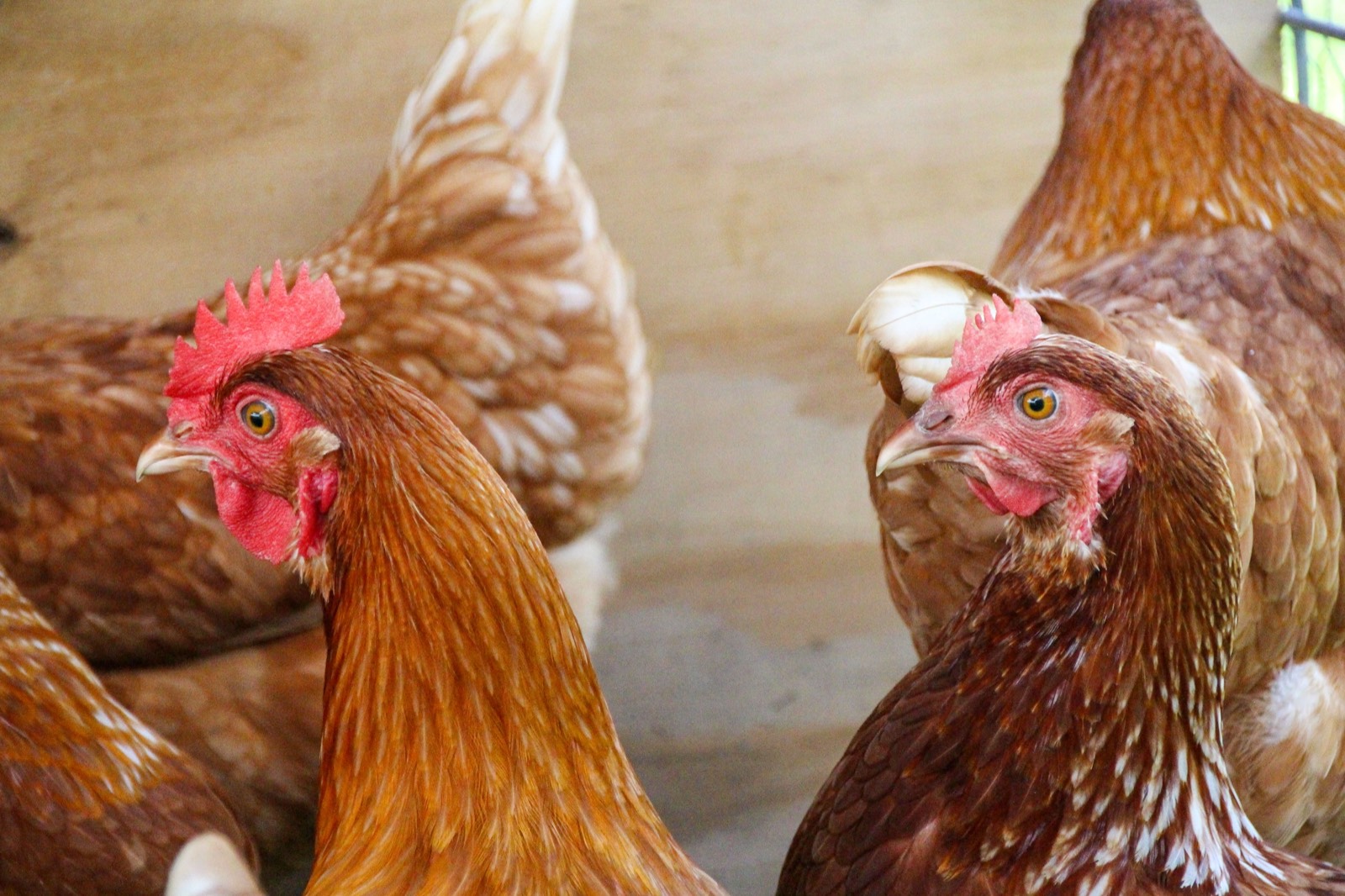
Run a mobile coop (chicken tractor or eggmobile) roughly three days behind the cattle. By then fly larvae in the manure are at their fattest — the hens scratch the pats apart, eat the larvae, break the parasite cycle and spread the fertility. That's the regenerative engine: cows mow, chickens sanitize.
Heat is the real enemy here, not cold. Choose heat-tolerant breeds (ISA Browns, Australorps, Leghorns), give deep shade and constant cool water through the 100°F summer, and orient the coop for airflow. Mild Zone-8 winters mean no heated coop is needed — dry and draft-free is enough.
| When | What |
|---|---|
| Spring | Bring home pullets; eggs begin within 2–4 weeks of settling in. Peak lay through the season. |
| Summer | Heat slows lay; prioritize shade, cool water and electrolytes. Move the coop every few days, 3 days behind cows. |
| Fall | Strong lay returns in the cooler weeks. Watch for a short molt — birds drop feathers and pause eggs while they regrow. |
| Winter | Shorter days cut lay. Add a timed light to hold ~14 hrs/day if you want winter eggs, or let them rest naturally. |
| Year 2–3 | Lay tapers with age; cull or rotate in new pullets so production stays steady. |
North Texas has it all: coyotes, bobcats, raccoons, possums, hawks and rat snakes. The rule is simple — lock the flock in a hardware-cloth-secured coop every single night. Use ½" hardware cloth, not chicken wire (raccoons reach through it), bury an apron or skirt against diggers, and use raccoon-proof latches. One missed lock-up can cost the whole flock.
Hens can die in extreme heat — watch for panting and provide shade and water. Dust-bathing controls mites/lice; check vents monthly. For biosecurity against avian influenza, discourage wild waterfowl, keep feed covered from wild birds and rodents, and quarantine any new birds for two weeks before mixing.
| Item | Cost |
|---|---|
| 12–15 point-of-lay pullets | $25–40 ea |
| Mobile coop / tractor (DIY) | $300–800 |
| Feed (pasture + scraps + grain) | ~$20–35/mo |
| Bedding, grit, oyster shell | $10–15/mo |
| You need: hardware cloth + secure latches | see Animals |