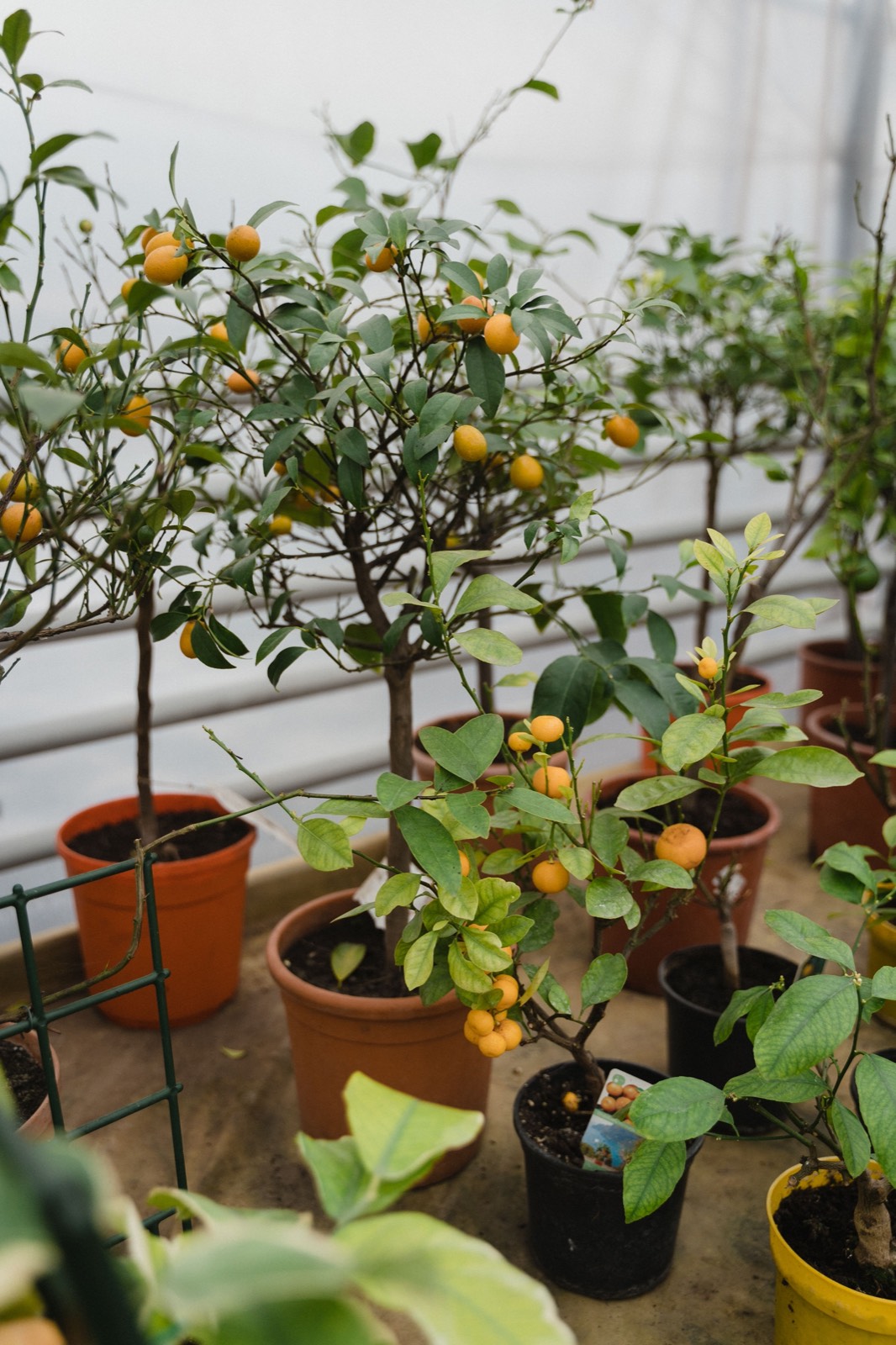
A how-to for the little powerhouse of cold-hardy citrus — a tidy 'Nagami' that thrives in a pot, shrugs off a light freeze, and gives bite-sized fruit you eat skin and all. Part of the Orchard.
Its naturally small size makes a 15–20 gallon pot plenty. Use a fast-draining citrus mix and set it in full sun on the warm south side. Feed with citrus fertilizer through the growing season. A kumquat stays neat and ornamental, so it earns a spot near the patio as easily as in the orchard.
Because it's so hardy, the kumquat can ride out a light freeze under frost cloth on the south side. For a hard mid-teens freeze, roll it into the greenhouse — being light and compact makes that easy. Move it back outside on mild days and for good once spring frosts pass. Water before a freeze, since moist soil and a wrapped pot hold a few extra degrees.
| When | What |
|---|---|
| Late winter | Light prune for shape; first feeding. Keep sheltered or cloth-ready for late frosts. |
| Spring | Move out for good after frosts; fragrant bloom (often later than other citrus). Feed. |
| Summer | Regular water and a second feeding; fruit sets and sizes on a compact frame. |
| Late fall–winter | Harvest — fruit colors deep orange and holds well on the tree for weeks. |
| Hard freeze warning | Cloth for light cold; into the greenhouse for a hard freeze. |
Hardier than its cousins, but not bulletproof — a mid-teens freeze still threatens an unprotected plant, and young trees are tenderer than the numbers suggest. Keep the frost cloth and a freeze plan ready. After cold stress, wait for spring growth before pruning to see what truly died back.
Watch for scale, sooty mold, and the occasional leaf miner on tender flushes — horticultural oil handles them. The smaller pot dries out quickly in summer heat, so check often, but don't let it sit waterlogged. Yellow leaves point to overwatering or a feeding shortfall.
| Item | Note |
|---|---|
| When to pick | Deep orange and slightly soft — they hold on the tree for weeks, so pick as you eat. |
| How to eat | Whole, skin and all — the rind is sweet, the flesh tart; also great candied or in marmalade. |
| Yield | A small tree fruits heavily for its size — a steady winter supply from one pot. |