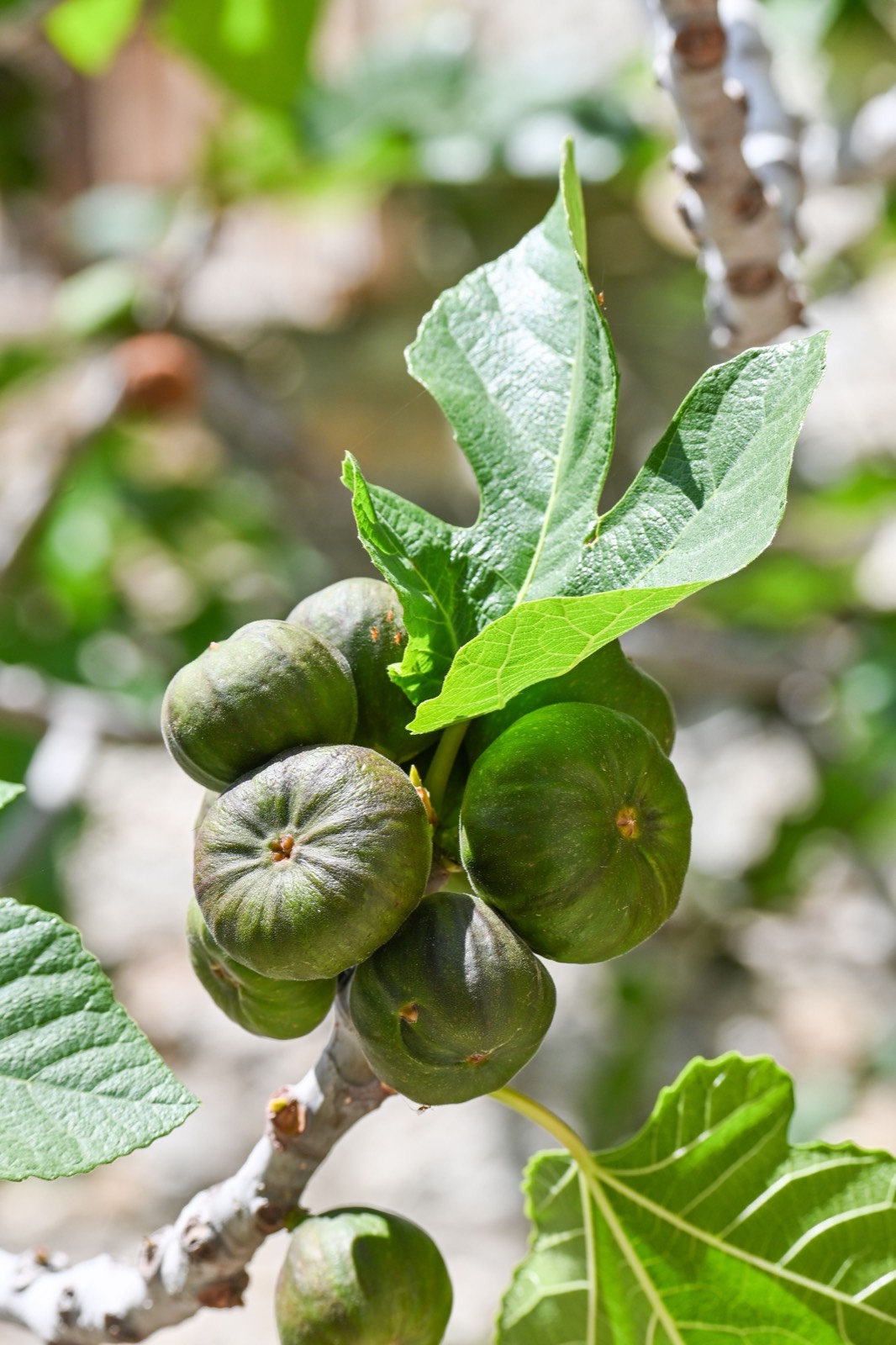
A how-to for the most carefree tree in the orchard — figs practically grow themselves in Zone 8, no spraying, no fuss, and sweet crops by year two. Part of the Orchard.
Plant in late winter to early spring. Give each tree 10–15 ft of room — they grow into wide multi-trunk shrubs. Full sun. A spot near a south wall traps heat and helps the tree shrug off our occasional hard winters. No trellis needed.
Figs tolerate North-TX alkaline clay well — just plant on a raised area for drainage and mulch heavily. In a hard Zone-8 winter the top may freeze back, but figs resprout vigorously from the roots and often still fruit that same year on new wood. Mulch the base to protect the crown.
| When | What |
|---|---|
| Feb–Mar | Plant & prune. Set new trees; on established trees do light shaping while dormant — figs need little pruning. |
| Mar–Apr | Leaf-out and resprouting if frozen back. Figs have no showy bloom — fruit forms directly on the wood. |
| Jun–Sep | Harvest the main crop as figs soften and droop. Keep water steady so fruit doesn't split or drop. |
| Nov–Dec | Tree drops leaves and goes dormant; mulch the base ahead of any hard freeze. |
Birds and wasps are the main thieves — pick ripe fruit promptly or net a small tree. Fig rust (leaf spots/early drop) shows up in humid years but rarely hurts the crop. Root-knot nematodes can weaken trees in sandy soil — heavy mulch and compost keep roots happy.
The real variable is hard freezes — expect occasional top-kill in a bad winter, then strong regrowth. Steady summer water prevents the fruit drop and splitting that comes from drought-then-deluge swings.
| Step | How |
|---|---|
| Knowing when | Ripe figs soften, droop on the stem, and often show a drop of nectar at the eye. Firm figs are not ready. |
| Picking | Pick gently every day or two at peak — they don't ripen off the tree and bruise easily. Wear sleeves; sap can irritate skin. |
| After harvest | Little to do — figs need almost no pruning. Just mulch for winter and keep water steady next summer. |