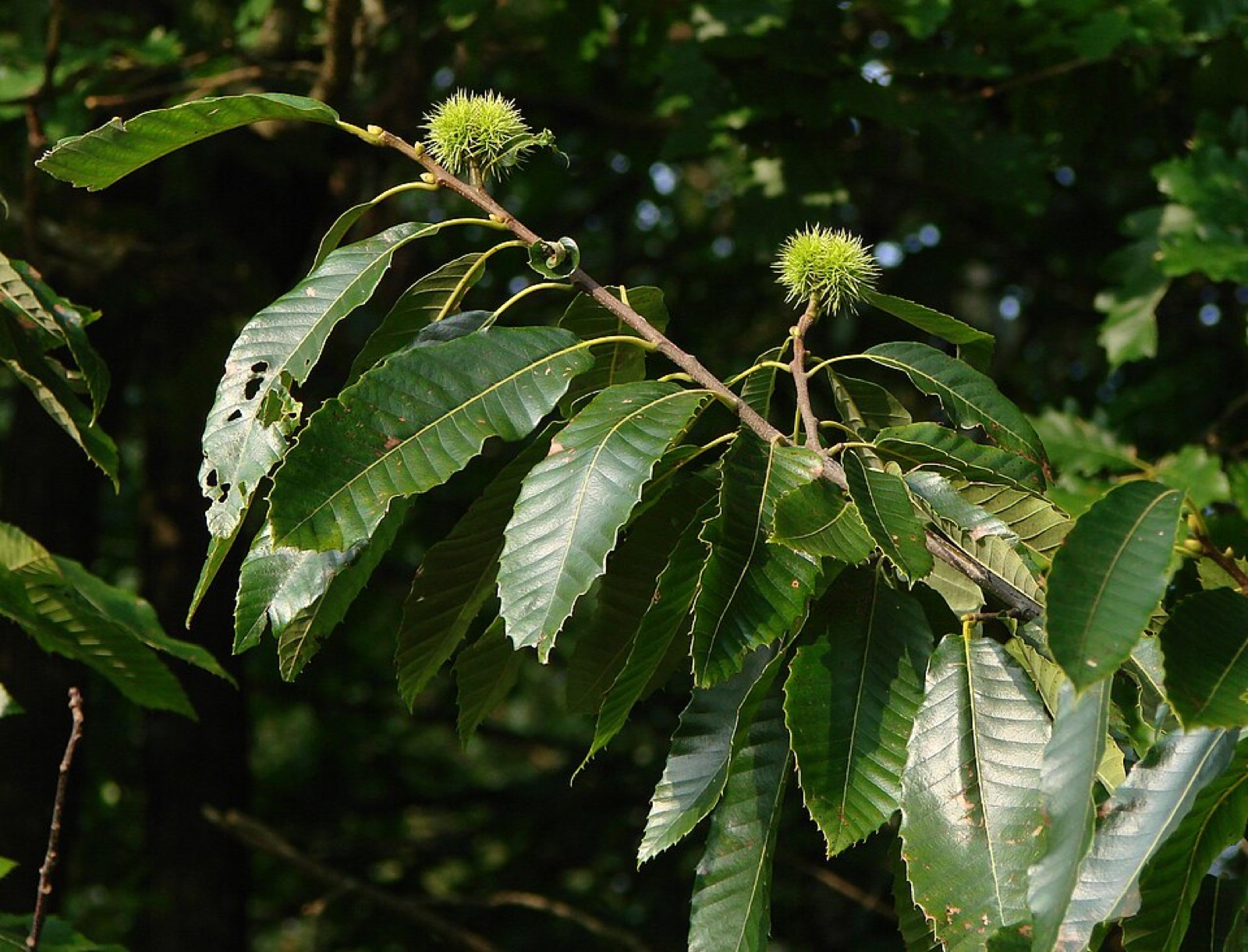
A how-to for the mast tree of the silvopasture — heavy fall nut drop the cattle and poultry forage, but fussy about drainage. Part of the Orchard.
Plant Dunstan chestnut — blight-resistant and bred for the Southeast/South — as grafted or named bare-root trees in winter dormancy. Space 40 ft apart in the wide paddock rows, and plant at least two for cross-pollination (chestnuts need a partner to set nuts). Keep the graft union above grade.
This is the make-or-break: chestnut needs well-drained, slightly acidic soil and dies in soggy clay, so reserve your best-draining sites or build a planting mound. Like the others, cage every tree hard against cattle rubbing and browsing. Mulch, keep grass off the trunk, and water deeply but never let the root zone stay waterlogged.
| When | What |
|---|---|
| Winter (dormant) | Plant Dunstan bare-root on well-drained ground; light prune; check & repair cages. |
| Spring | Leafs out late; ensure crown drains freely after rains. Light feed if growth is weak. |
| Early summer | Catkins bloom (strong scent); cross-pollination sets the nuts. Watch drainage in wet spells. |
| Summer | Spiny burs fill out; deep-water young trees in drought but never leave standing water. |
| Fall | Burs split and nuts drop. Gather promptly (nuts mold fast); cattle and poultry forage the mast. |
Root rot from poor drainage is the number-one killer here — Phytophthora thrives in our wet clay, so site selection is everything. Chestnut blight is why we use resistant Dunstan stock. Watch for chestnut weevil boring the nuts and gall wasp on susceptible types.
Cattle will rub and browse a young tree to death, so keep the cage solid until the trunk is thick. The spiny burs are a hazard underfoot, and dropped nuts mold or sprout within days on warm ground — gather what you want fast and let the stock clean up the rest before it spoils.
| Item | Note |
|---|---|
| First mast crop | 4–7 yr |
| Harvest window | fall, as burs split |
| Storage | refrigerate fast; nuts spoil quickly |
| Dunstan trees (each) | $40–90 |
| You need: well-drained ground + cages | see Orchard |