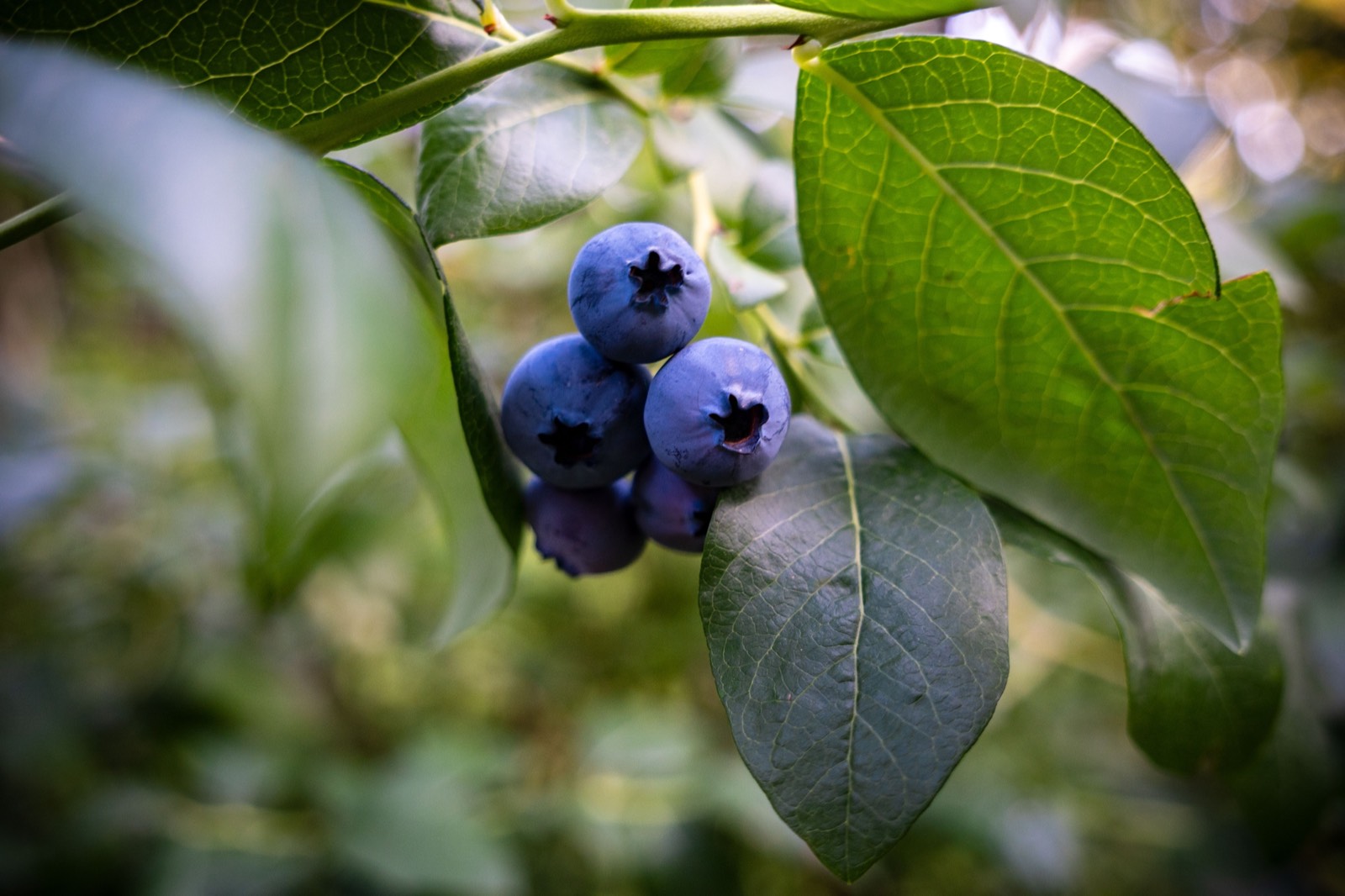
A how-to for the one tricky berry on alkaline North-Texas clay — rabbiteye blueberries grown in amended acid beds or containers, with a second variety for pollination. Part of the Orchard.
Plant in late winter to early spring. Space rabbiteye bushes 5–6 ft apart, in full to mostly full sun. Plant at least two varieties (e.g. Brightwell, Tifblue, Climax, Powderblue) — rabbiteyes are poorly self-fruitful and crop far better with a partner nearby for cross-pollination.
Do not plant in native North-TX alkaline clay. Instead build raised beds or containers of an acidic mix — peat moss plus pine bark — and add elemental sulfur to drop pH to 4.5–5.5. Mulch with pine bark/needles, keep it acidic year after year, and irrigate with low-alkalinity water (rainwater is ideal) so the soil doesn't creep back toward neutral.
| When | What |
|---|---|
| Feb–Mar | Prune & plant. Set new bushes in acid beds; on established plants thin old canes and dead wood while dormant. |
| Mar–Apr | Bloom. Bell-shaped flowers; bees cross-pollinate the two varieties. Protect open bloom from late frost. |
| May–Jul | Harvest. Rabbiteyes ripen late spring into summer over several weeks — pick repeatedly. |
| Year-round | Test soil pH; reapply sulfur and pine-bark mulch to keep the bed acidic — the constant battle on alkaline ground. |
The #1 failure here is pH drifting up — leaves yellow between green veins (iron chlorosis), growth stalls, and the bush slowly dies. Counter it by retesting soil, adding elemental sulfur, mulching with pine, and watering with low-alkalinity / rainwater, never hard well water.
Birds are the biggest pest — net bushes as fruit colors. Blueberries are shallow-rooted and can't take drought or soggy feet, so use consistent drip and well-drained beds. Avoid over-fertilizing; gentle acidic fertilizer only.
| Step | How |
|---|---|
| Knowing when | Fully blue all over — and then wait a few more days. Berries sweeten on the bush after they turn blue. |
| Picking | Roll ripe berries gently off into your hand; they release easily. Pick every few days through the multi-week season. |
| Upkeep | After harvest, refresh pine mulch, check pH, and prune out the oldest canes each winter to keep the bush productive. |