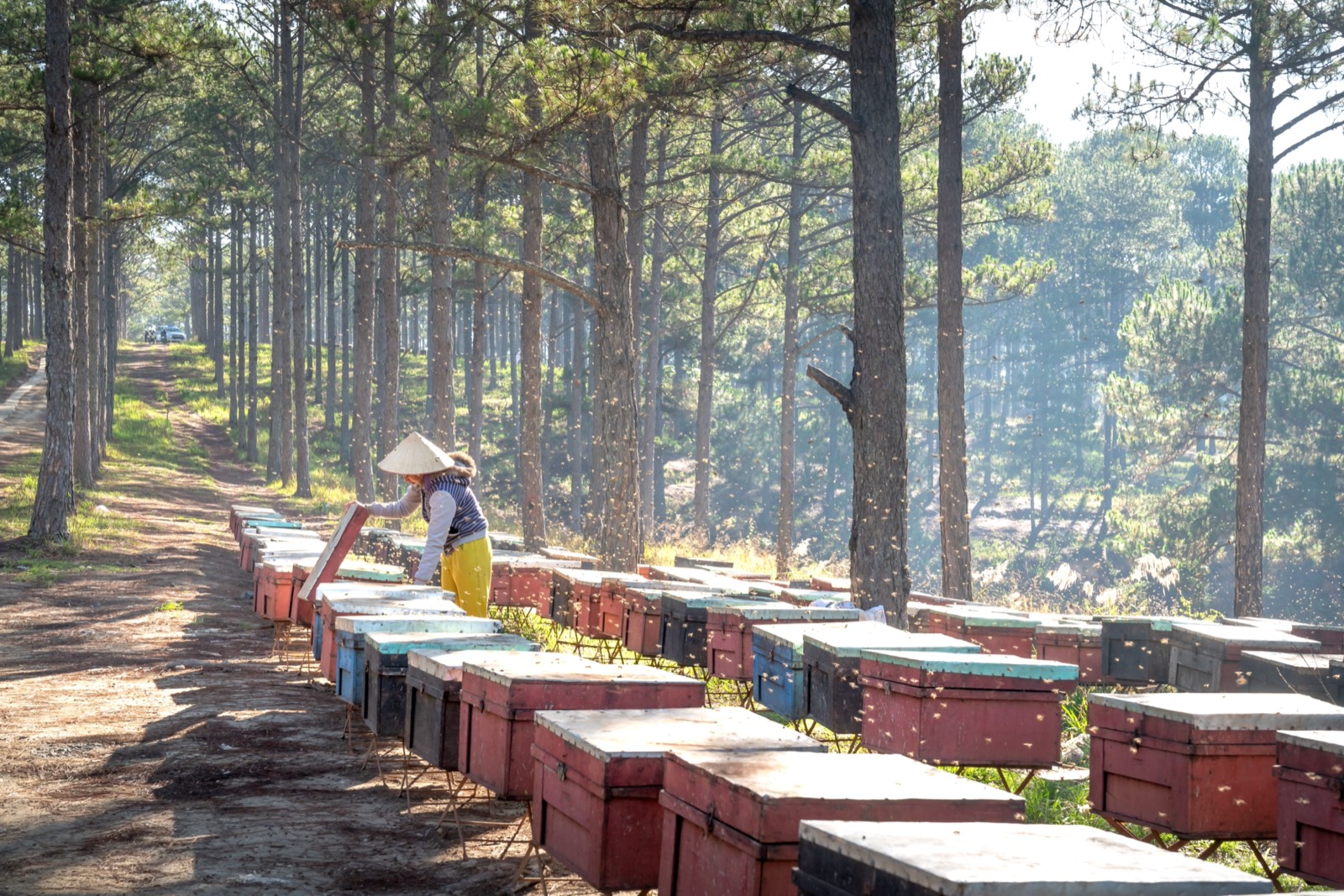
Start with a nuc (5-frame nucleus colony) or a package in March–April as the nectar flow begins. Set hives facing southeast for morning sun, on a stand off the ground, with a nearby water source (a pond edge or a shallow dish with stones). Leave them a clear flight path away from foot traffic.
The big spring flow here is clover, privet and wildflowers; expect a summer dearth in the July–August heat when little blooms — give light afternoon shade and watch food stores. Mild Zone-8 winters are easy, but bees still need stored honey to cluster through cold snaps. Register your apiary with the Texas Apiary Inspection Service.
| When | What |
|---|---|
| Spring | Install nucs; colonies build fast on the nectar flow. Swarm season — inspect every 7–10 days and give room or split to prevent swarming. |
| Early summer | Peak. Add honey supers as boxes fill. First small harvest possible from strong year-2 hives. |
| Late summer (dearth) | Little blooming in the heat. Reduce entrances against robbing; check stores; treat for varroa after the harvest. |
| Fall | Bees pack away for winter. Make sure each hive has enough stored honey; do final mite check. |
| Winter | Minimal — bees cluster. Mild Zone-8 winters; just ensure stores and ventilation, heft for weight on warm days. |
Varroa mites are the number-one killer — monitor with a sugar-roll or alcohol wash and treat after harvest. Watch for small hive beetles (worse in humid heat — keep colonies strong) and wax moths in weak hives. Reduce entrances during the dearth to stop robbing by other bees.
In spring a crowded hive will swarm (and you lose half the bees) — give space and split. Summer heat stresses the cluster, so provide shade and water. Africanized genetics exist in North Texas, so requeen any hive that turns hot. Skunks and raccoons raid hives at night — a stand or hot wire keeps them off.
| Item | Cost |
|---|---|
| Two complete Langstroth hives | $200–350 ea |
| Two nucs (bees + queen) | $150–200 ea |
| Suit, smoker, hive tool | $150–250 |
| Varroa treatment / year | $30–60 |
| You gain: orchard & garden pollination | priceless |