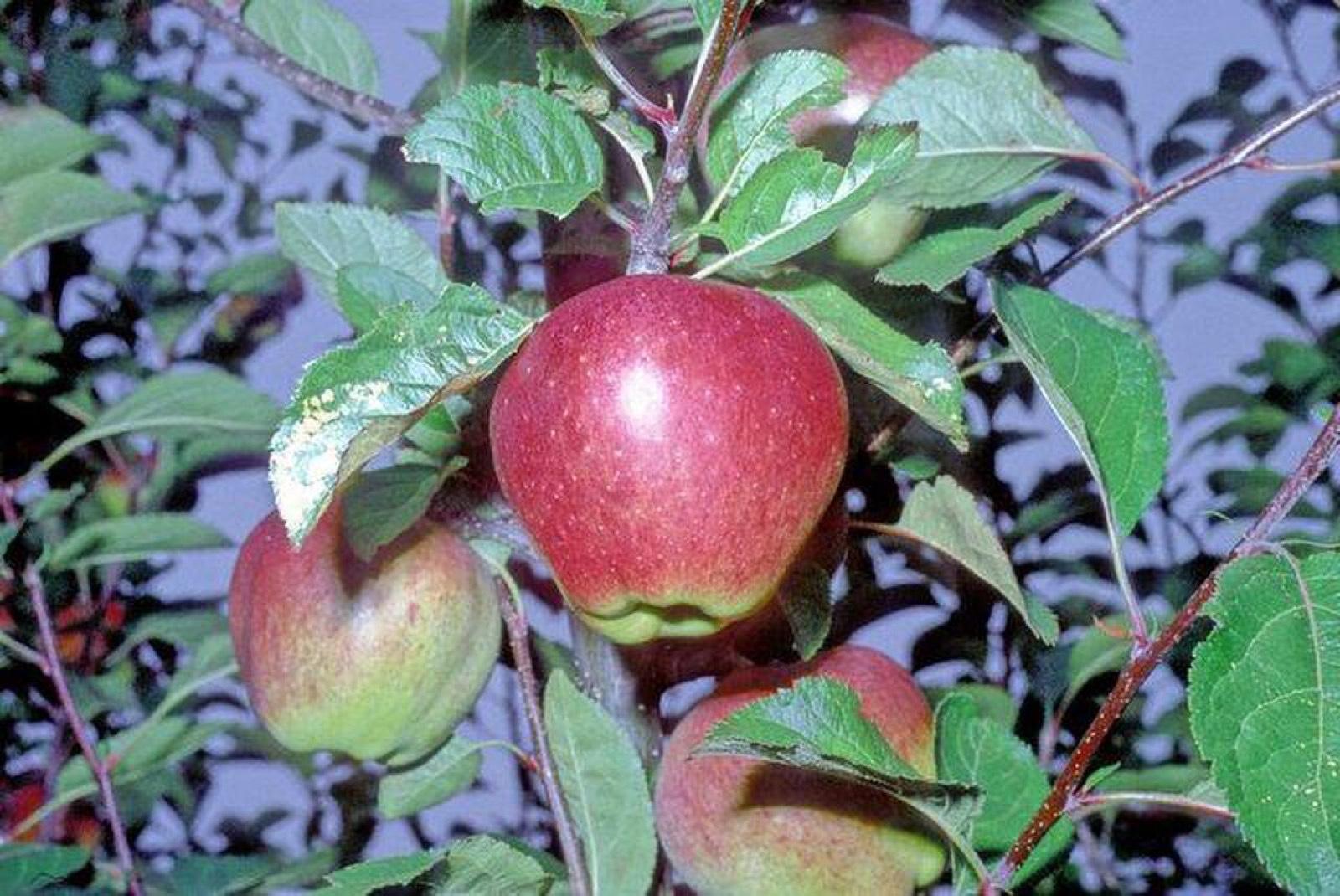
A how-to for growing apples in North Texas heat and clay — built around low-chill cultivars that actually fruit in Zone 8. Part of the Orchard.
Set bare-root trees in Jan–Feb while fully dormant — cheapest, establishes best. Space 15 ft apart in full sun. Plant the graft union 2–3 in above the soil line; never bury it. Water in deeply and mulch the ring (keep mulch off the trunk).
Stick to the low-chill pair: Anna (early, crisp) and Dorsett Golden (its classic pollinizer). Both bloom together — that overlap is what makes the cross work. Six of each across the row gives a long, staggered harvest.
| When | What |
|---|---|
| Dormant (Jan–Feb) | Prune to an open center / modified central leader; remove crossing and dead wood while leafless. |
| Spring bloom (Mar) | White-pink bloom; Anna & Dorsett overlap and cross-pollinate. Watch for a late frost. |
| Late spring | Thin to one apple per cluster, ~6 in apart — bigger fruit, less limb breakage, steadier yearly bearing. |
| Summer | Deep weekly water in heat; bag or spray for codling moth; keep the mulch ring fed. |
| Summer–early fall | Harvest — Anna ripens early (June–July here), Dorsett Golden follows. |
Codling moth (the "worm in the apple") is the #1 enemy — use traps, bagging, or timed sprays. Cedar-apple rust and fire blight can hit; our low-chill cultivars have decent tolerance, but prune out any blackened "shepherd's crook" shoots and sterilize tools between cuts.
Late frost is the real heartbreaker — a warm February pushes early bloom, then a cold snap kills the crop. Site trees off frost-pocket low ground. In summer, sunscald and drought stress young trees; consistent water and a whitewashed trunk help.
| Item | Figure |
|---|---|
| First real crop | year 3–5 |
| Mature yield per tree | ~3–6 bu |
| Trees in the block | 12 @ 15 ft |
| Best use | fresh, sauce, dried |